Text based RPG games: do you want tactics or an open sentence?
A text interface does not tell you how a game resolves decisions. In SanctuaryRPG, a fight offers named attacks, healing and repositioning. In the AI adventures, players enter an action or dialogue and read the continuation. Start with that distinction before choosing a setting.
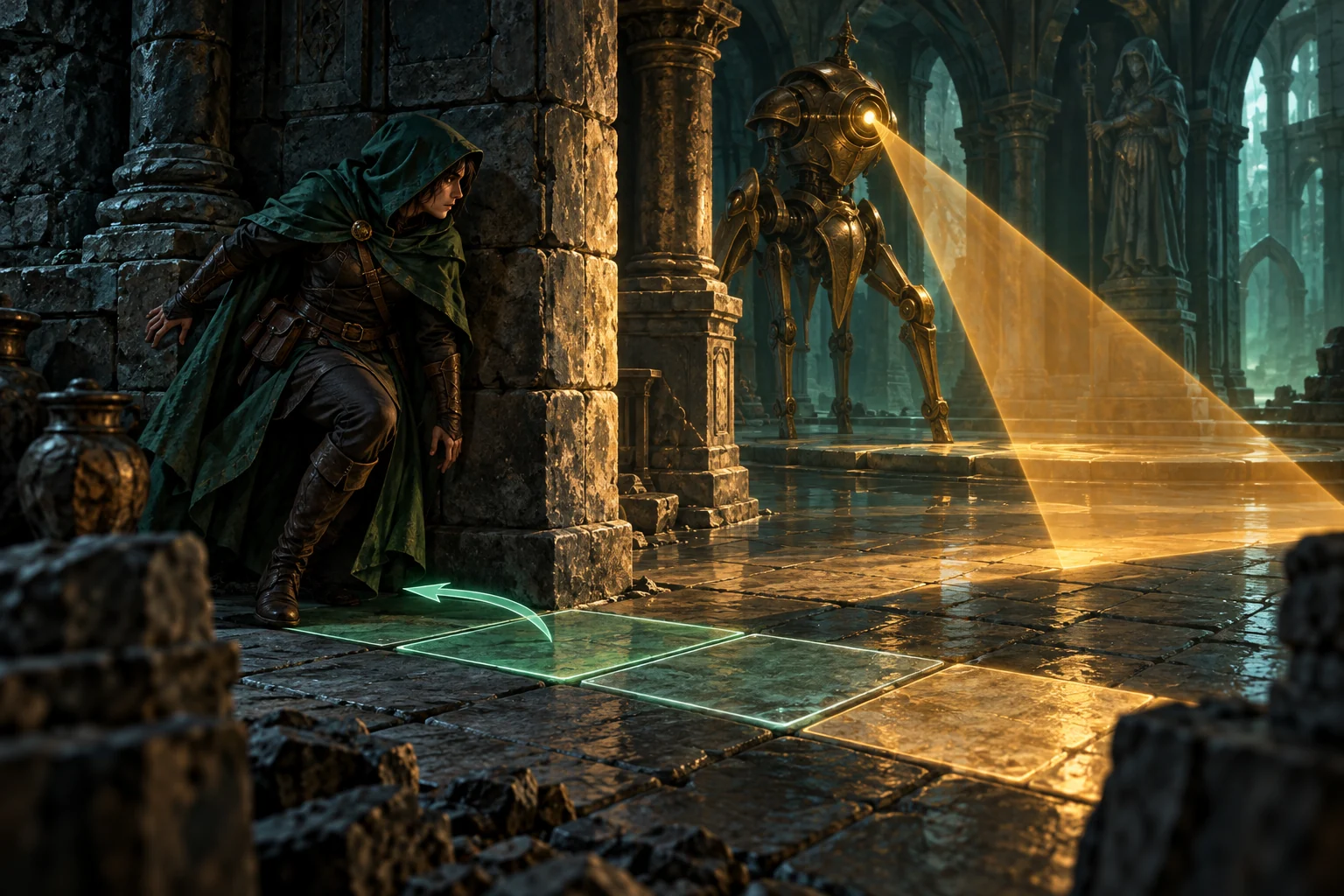
Consider what happens when a fight goes badly. In the SanctuaryRPG encounter, a boss builds a lock-on threat. Repositioning is presented as a way to reduce it; later, the player overlooks the threat and takes a missile hit. The useful decision is whether to interrupt an attack sequence to address the threat. Choosing another verb is not the same kind of move.
The official SanctuaryRPG description identifies a turn-based ASCII dungeon adventure. That classification fits the tactical choices described here. It does not make the game a free-form conversation engine.
Text RPG games: what does your next command actually change?
AI Dungeon's knight begins with a dragon-defeating quest. Asking the dragon to talk produces a companion-like turn: it lands on the knight's shoulder, and the continuation introduces an evil wizard as a new problem. That is an appealing change of direction if you want improvisation. It also changes the premise you were apparently preparing to solve.
The same session supplies a sharper warning. A peasant tries to wrestle a knife from a man's hands. The reply instead has the character put the knife in their own mouth and throw it away. The action was accepted as input, but its intended resolution was not preserved. Broad input freedom and precise character control are different benefits.
SanctuaryRPG offers a contrasting frustration. During a boss fight, the player wants to reposition but cannot do it at that moment. A slash precedes a later reposition. Here the available action sequence constrains the player; in the knife scene, an accepted sentence leads somewhere unintended. Decide which constraint you would rather work with.
Text RPG online: can a conversation survive a change of direction?
A historical AI Dungeon detective story repeatedly returns to telephone calls with the same character. Breaking and then burning the phone does not prevent another answered call. Later, attempts to change the situation collapse into repeated waking and repeated phrases. This is a concrete continuity problem, not evidence that every online text game behaves that way.
A different scene shows why correction can still be part of the fun. A visitor insists that a nuclear war has not yet happened, despite the post-apocalyptic premise. Repeated explanations fail to settle the disagreement. Sending the visitor outside to inspect the damage finally produces an acknowledgement. The repair works through a new narrated event rather than a reliable factual correction command.
AI text adventure: does a new paragraph move the story forward?
NovelAI's historical library encounter circles around how to find hidden objects. A contact says a friend knows where they are, but the conversation still turns to obtaining a detector. Leaving for the sewers changes the location; later dialogue still asks where the objects are. A new location therefore does not, in this sequence, settle the search.

That contrasts with SanctuaryRPG's progression after the robot encounter. The defeated machine is taken to a blacksmith. A marked component points toward another city. A separate monastery problem offers a detour. The next decision becomes which lead to follow. This is a comparison of the recorded sequences, not a controlled test of which product produces better quests.
AI text RPG: can you make an ending stick?
In the NovelAI sewer scene, repeated attempts to remove an antagonist do not settle the encounter. The players discuss switching from an attempted action to a direct story statement; the next continuation leaves the protagonist alone. Later, another ending is followed by renewed narration, and the players use undo while deciding where to stop. These are different interventions, even when the intended destination is simply the end of a scene.
AI Dungeon also supplies an opposite outcome: a character chooses to remain in a dungeon for the rest of their life, and the continuation ends with death and a game-over message. The records therefore support neither “endings never work” nor “writing an ending always closes the adventure.” The action, input mode and continuation matter. NovelAI's Text Adventure documentation distinguishes action and dialogue input from direct story editing; these examples should not be collapsed into one command rule.
Start a short encounter in your chosen game and check whether its first reply resolves the move you actually intended.