When Should an AI RPG Generator Become a Rules Assistant?
Use an AI RPG generator as a rules assistant when you want help finding relevant passages but still need a ruling you can check. Keep the rule text and the final decision separate from the generated story. This is a way to divide the work, not a guarantee that a particular model will interpret a rule correctly.
Story controls and rules checks are different
A narrator can keep an adventure moving while a disputed rule remains unresolved. Those are different jobs. AI Dungeon’s Getting Started guide describes Do, Say and Story inputs, followed by Undo, Redo, Retry and Edit controls for changing the action. It also describes Memory and Story Cards as aids to coherence. These controls explain how to steer a story; they do not, by themselves, establish that a tabletop ruling is correct.
A reference guide can be more useful than a referee
One Rool.dev play experience makes the distinction concrete. The player described rulebook recall becoming fuzzy during a session, despite the tool retaining outlines and other material. What seemed more useful was extracting selected rules from solo and other RPG books into a homebrew reference guide, including directions back to the relevant book sections. The player was considering a further change: feeding completed session results to the AI afterwards for narrative description, instead of making it responsible for carrying the game. That last change was an intention, not a tested result.
Keep the dice and the book in human hands
A separate Runequest play experience used a different boundary. The player had physical copies of the core book and bestiary, told ChatGPT Plus that rules-based directions would be checked against those books, and supplied corrections. The player also chose to roll physical dice. Some plot points were still forgotten, but the player considered the remaining assistance useful. This does not prove that manual dice improve model memory. It shows that a person can keep responsibility for rules and rolls while still using generated narration.
Campaign truth needs its own boundary
Another campaign experience reported better continuity after moving persistent campaign facts into a small set of project files and setting rules for what counted as true. The AI was allowed to improvise around those records. This is a different intervention from looking up a rule: one addresses the campaign’s established facts, while the other addresses how an action is resolved. Neither should silently overwrite the other.
A suggested division of work
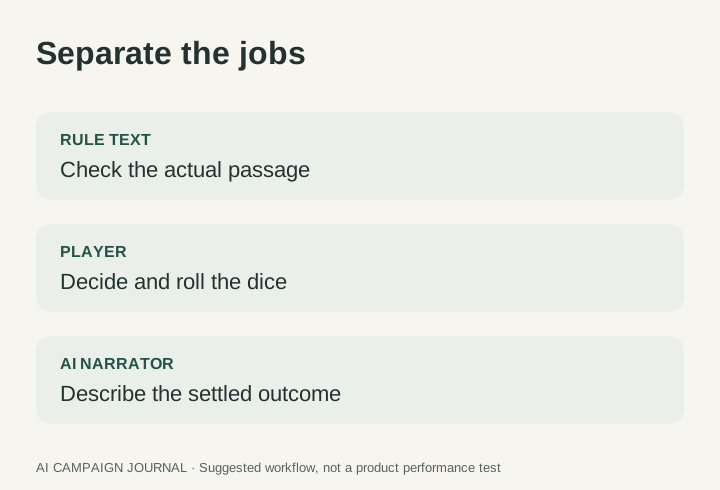
A practical workflow follows from those distinctions. Ask for the relevant passage before asking for a verdict. Read that passage yourself, settle the action and its result, then give the narrator the outcome to describe. If you cannot verify the passage, leave the ruling unresolved rather than treating a fluent explanation as confirmation. This is our suggested procedure, not a measured comparison of products.
Repair the ruling before the story spreads it
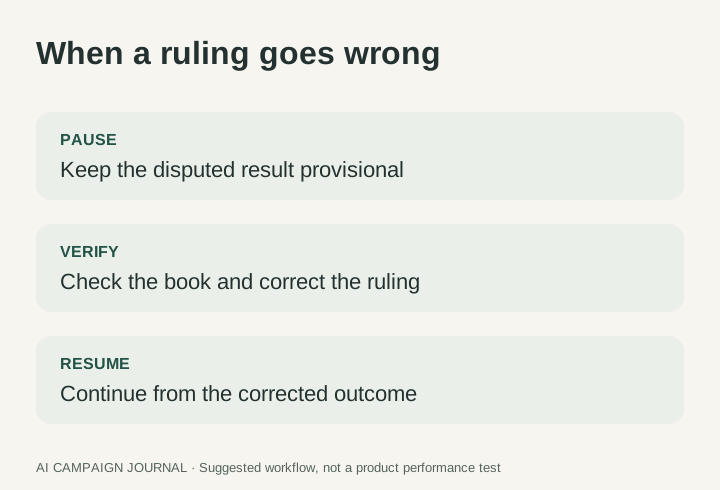
When a generated ruling conflicts with your book, pause that result before adding more consequences. Correct the ruling and state the outcome that should now be narrated. Keep any campaign record consistent with that correction. The aim is to avoid turning one disputed interpretation into several new facts that must later be repaired.
Can the AI handle every roll and ruling?
Can I let the AI roll and interpret everything? You can choose that style of play, but the experiences above do not establish that its rolls or interpretations are reliable. If checking a rule matters to your game, retain a source you can inspect and decide who has the final say before the scene continues.
Use the part that earns its place
Should I abandon the generator if I stop using it as the game master? No such conclusion follows. It may remain useful for locating material, organising a reference guide or describing an outcome you have already resolved. Choose the job you are willing to delegate, rather than assuming every part of the game must be delegated together.